
Living and working in the UAE, one of the world’s most globally connected hubs, you cannot help but notice how money moves across borders every second of the day. For millions of expatriates, remittances are not just transactions; they are lifelines that support families, education, and opportunities back home.
What’s even more interesting is who is driving this change. Migration today is largely shaped by young adults, with most international migrants falling within the working-age group, particularly those in their 20s and early 30s. Many originate from countries such as the Philippines, India, Indonesia, and Vietnam, reflecting strong outbound migration trends across Asia. These younger migrants are increasingly digital-first, driving demand for faster, more seamless, and affordable ways to send money home.
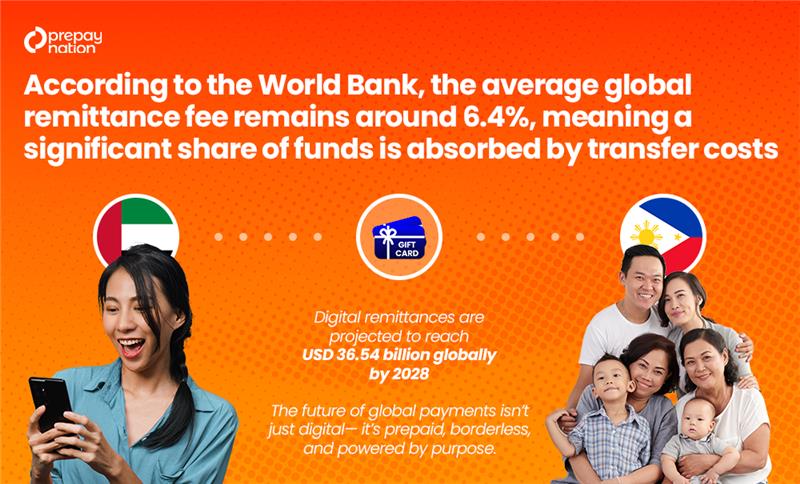
Yet, traditional remittance systems haven’t always kept up. According to the World Bank, the average global remittance fee remains around 6.4%, meaning a significant share of funds is absorbed by transfer costs—money that could otherwise go directly to families. Beyond these visible fees, hidden costs such as foreign exchange (FX) spreads can further erode the value received, while varying regulatory requirements across jurisdictions often introduce additional delays and complexity in cross-border transfers. The Bank estimates that lowering fees could save recipients over $16 billion annually.
A real-world example makes this clear:
Take Maria, a Filipina domestic worker in Dubai. Every month, she sends part of her salary back home to her family in Zambales. Traditionally, she relied on a major bank or remittance service, paying fees up to 6–8% of the amount sent, with transfers taking 2–3 business days. Today, Maria uses digital vouchers in a variety of ways: she purchases mobile airtime for her mom, data packages for her brother to support online studies, and even digital vouchers for groceries. These vouchers, bought in AED, can be redeemed instantly in PHP at partnered retail outlets in the Philippines, often with fees less than 2%. Not only does this make funds available faster, but it also gives Maria full transparency and control over exactly how her support reaches her family.
Similarly, Ramesh, an Indian IT professional in Abu Dhabi, can send gift cards to relatives in India or even Indonesia. These vouchers are accepted at major retail and online merchants, providing more flexibility than traditional bank transfers, which often require multiple steps and incur hidden FX charges.
Prepaid versus traditional remittances:
● Speed: Prepaid vouchers can be redeemed immediately upon receipt, whereas traditional bank transfers may take several days.
● Cost: Fees for digital vouchers are often significantly lower than banks or legacy remittance providers, maximizing the funds received.
● Accessibility: Recipients don’t need a bank account; prepaid vouchers can be used at retail outlets or online, empowering those in cash-based economies.
●Transparency: Vouchers offer clear value with no hidden FX margins, making it easier for senders and recipients to track and manage funds.
At Prepay Nation, we’re witnessing a digital revolution where prepaid and digital vouchers are transforming how people send and receive value. These innovations bridge the gap between cash economies and digital finance, enabling anyone, whether banked or unbanked, to convert local currency into digital value that can be redeemed abroad.
And it’s not just about convenience, it’s about financial empowerment.
✔ 1.4 billion adults globally remain unbanked, but digital financial services, including prepaid and mobile solutions, are helping expand access and bring more people into the formal financial system.
✔ Digital remittances are projected to reach USD 36.54 billion globally by 2028, reflecting strong growth driven by increasing digital adoption and the shift toward more convenient, online cross-border transfer channels (Source: Facts & Factors, via GlobeNewswire).
✔ Prepaid ecosystems lower costs, increase transparency, and make global transfers more inclusive than ever before, while continuing to evolve to meet regulatory standards and ensure secure, compliant transactions across borders.
At its core, this innovation is about inclusion and access; ensuring that everyone, everywhere, can participate in the digital economy, regardless of their access to traditional banking or the complexities of cross-border financial systems.
The future of global payments isn’t just digital—it’s prepaid, borderless, and powered by purpose. At Prepay Nation, we’re proud to be part of this transformation; connecting communities, breaking barriers, and helping the world move value smarter.
If your organization is ready to embrace the future of cross-border, small-value prepaid transfers, connect with our team. Together, we can turn digital inclusion into a meaningful global impact

Author
Kim Fajardo, Corporate Marketing & Exec. Support Manager