
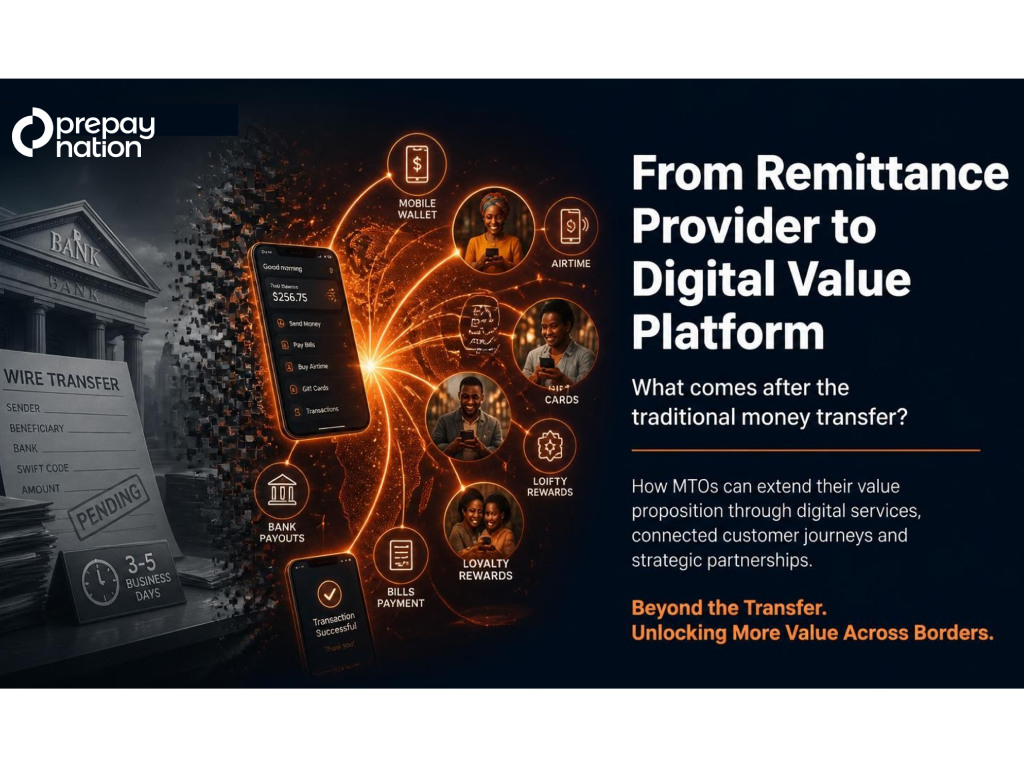
What comes after the traditional money transfer?
For decades, money transfer operators (MTOs) have built their businesses around a fundamental need: helping people send money across borders quickly, securely and reliably. That need remains as important as ever. But the market in which MTOs operate is changing, and the question facing the industry is no longer simply how to transfer money more efficiently. It is what comes after the traditional money transfer.
As digital adoption reshapes consumer expectations, competition intensifies and customers increasingly expect services to work across channels, MTOs have an opportunity to rethink their role in the customer relationship.
The next stage of growth may not come from moving more money alone, but from building broader digital value propositions around the people who send it, receive it and use it. The opportunity is to evolve from a transaction-led business into a more connected digital value platform, without losing sight of the trust, accessibility and local relationships that made the traditional remittance model successful.
Beyond the transaction: a changing business model
The traditional remittance model has long relied on physical distribution, agent networks and retail points of sale (POSs). These channels remain essential in many markets, particularly where customers depend on cash, value face-to-face assistance or have limited access to digital financial services.
However, customer journeys are becoming increasingly omnichannel. A customer may discover a service online, initiate a transaction through an app and complete it at a physical location. Another may prefer an agent-assisted experience but expect digital notifications, transparent pricing and convenient access to services afterwards.
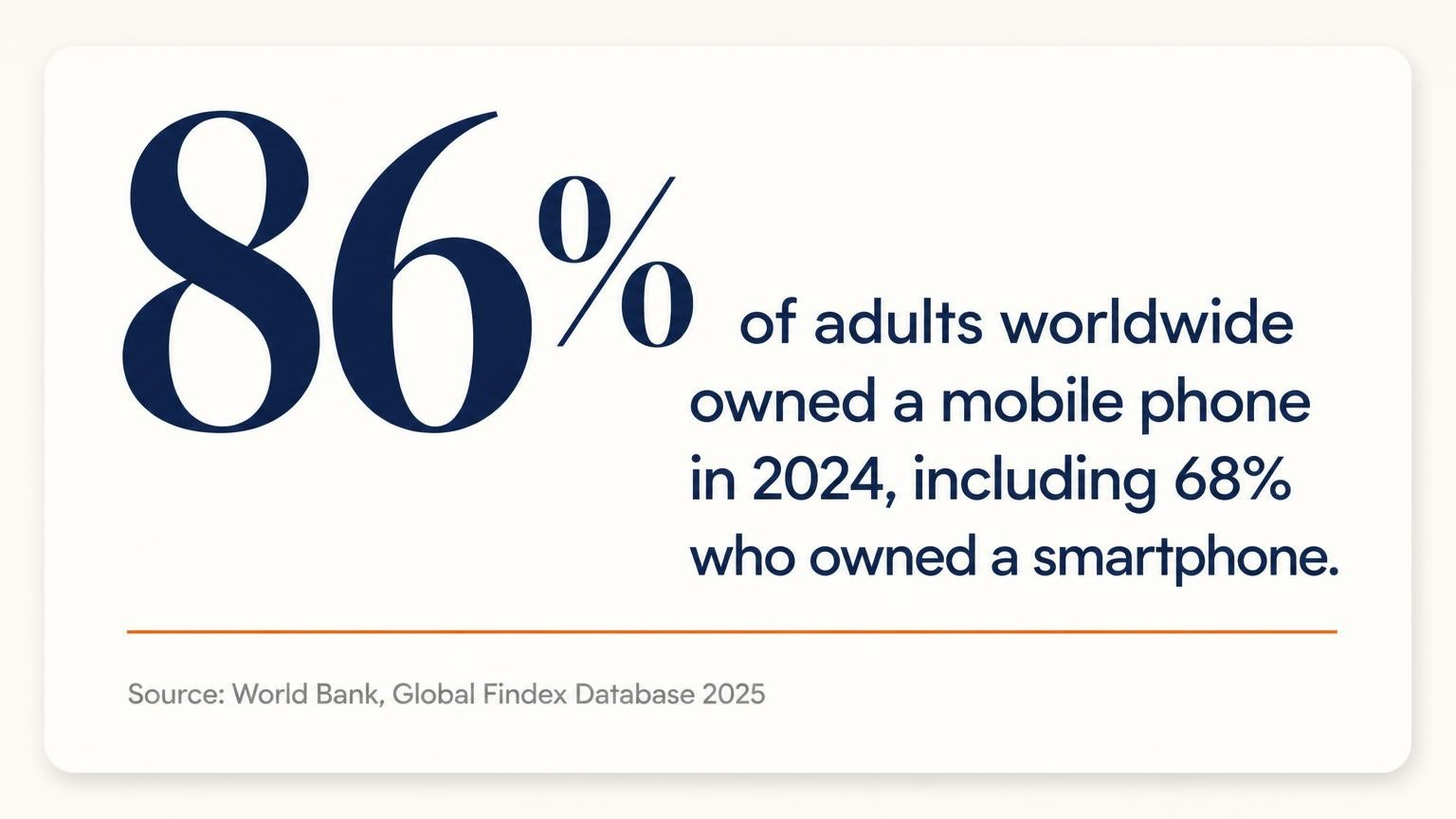
The scale of mobile access provides a foundation for this evolution. According to the World Bank’s Global Findex Database 2025, 86% of adults worldwide owned a mobile phone in 2024, including 68% who owned a smartphone. While access and digital readiness still vary across markets, digital merchant payments are gaining ground; this widespread connectivity creates opportunities for MTOs to make their services more accessible through connected digital and physical channels.
For MTOs, this is not simply a question of replacing physical locations with mobile applications. It is about connecting channels, reducing friction and making the relationship with the customer more continuous.
The challenge is to build a model in which digital and physical distribution complement one another. Technology can improve convenience and operational efficiency, while established agent networks continue to provide reach, reassurance and human support where these matter the most.
The strongest models will be those that recognize that digital transformation is not defined by the channel through which a transaction takes place. It is defined by how effectively the business serves the customer across the entire journey.
Digital channels also have a measurable role in the economics of remittances.
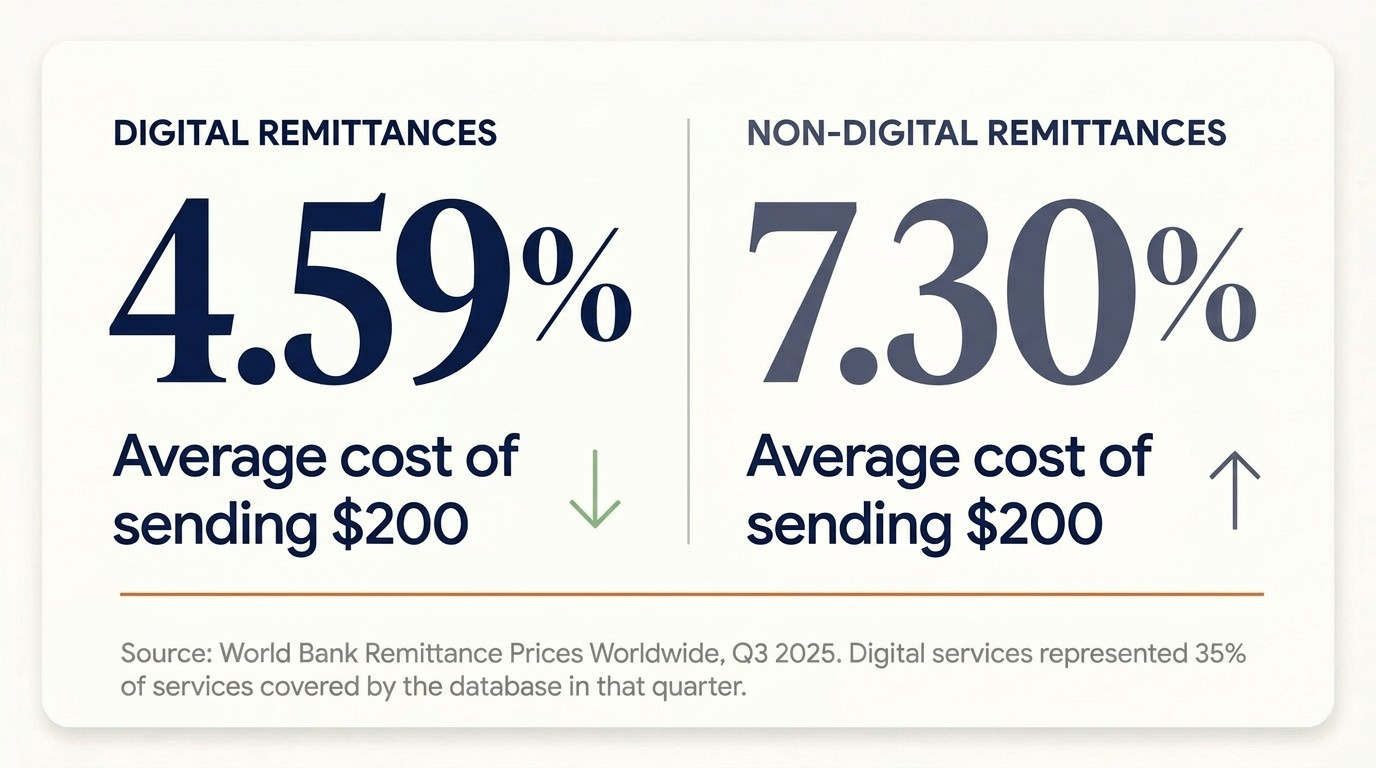
The World Bank’s Remittance Prices Worldwide database recorded an average cost of 4.59% for digital remittances in Q3 2025, compared with 7.30% for non-digital services. While these figures do not capture every operator’s costs or profitability, they underline why channel strategy and digital delivery matter in an increasingly competitive market.
The money transfer is the beginning, not the end
A successful remittance transaction meets an immediate need. But the financial and everyday needs of senders and recipients extend far beyond the moment money changes hands. Recipients may need mobile airtime or data to communicate with family, access digital services or participate in the online economy.
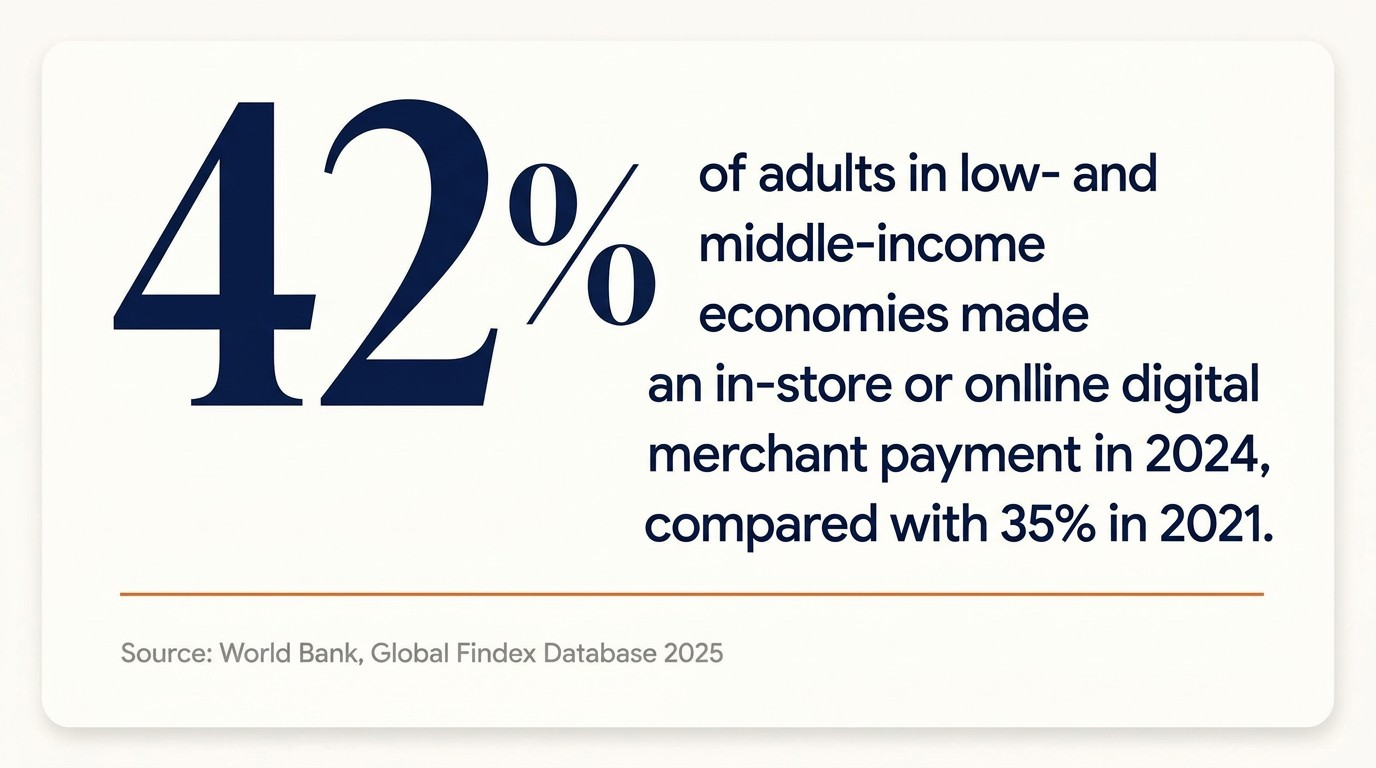
The broader shift towards digital commerce reinforces the relevance of this opportunity. The World Bank reports that 42% of adults in low- and middle-income economies made an in-store or online digital merchant payment in 2024, compared with 35% in 2021. Although this is not a measure of demand for digital products sold by MTOs, it illustrates the growing role of digital payments in everyday commerce.
They may need to pay household bills, purchase digital vouchers or access other everyday services. Senders, meanwhile, may value convenient ways to support family members beyond periodic transfers.
These needs create a natural adjacency for MTOs: digital products and services that complement the core money transfer proposition.
Consider a simple example: A customer sends money to a family member abroad. That transaction completes successfully, but the recipient may subsequently need mobile data, airtime or a digital voucher to make a grocery purchase at a supermarket. If the MTO can facilitate access to these services through an integrated digital experience or a trusted partner, it can help address another customer need without necessarily originating another remittance.
The strategic value lies in the relationship between these services.
Digital products should not be added simply to make a portfolio look larger. They should solve relevant customer problems, fit naturally into existing journeys and create a credible commercial opportunity for the operator.
For MTOs, this opens the possibility of building a more useful proposition around the transfer itself – One that can generate additional engagement, create new revenue opportunities and strengthen customer relationships between transactions.
From occasional interactions to continuous engagement
Remittances are often driven by specific events and recurring obligations. Customers may send money weekly, monthly or when a family member needs support. Between these moments, however, the MTO may have limited opportunities to engage them. A broader digital value proposition can help change this dynamic.
Relevant services, targeted offers and convenient digital access can create additional reasons for customers to interact with the business. A recipient who accesses a digital product through an MTO’s ecosystem may have another reason to return. A sender may be able to support a family member with a smaller, more immediate digital purchase without initiating a full money transfer.
This does not mean every MTO needs to become a super-app, nor that customers will automatically adopt every additional service offered. More products do not necessarily translate into more loyalty.
The objective is to identify the services that genuinely fit the needs of the customer base and make them easy to discover, purchase and use.
That requires a shift in measurement as well. Beyond transaction volumes and average transfer values, operators can begin examining repeat engagement, cross-service adoption, customer retention and the contribution of complementary services to overall customer value.
The question changes from How many transfers did we process? to How much value did we deliver to our customers, and how often did they choose to return?
Building a broader proposition does not mean building everything in-house
For many MTOs, the ambition to expand into digital services encounters a practical constraint: developing, integrating and maintaining new capabilities can be expensive and operationally complex.
New products may require additional supplier relationships, technical integrations, local market knowledge, payment capabilities, compliance reviews and ongoing support. Building every component independently can slow time to market and divert resources from the core remittance business.
A platform-oriented approach offers an alternative. Rather than owning every product or technology layer, MTOs can combine their existing strengths – customer relationships, distribution, brand recognition, market knowledge and transaction infrastructure – with capabilities provided by specialized partners.
Depending on the service, this could include access to mobile operators, digital product providers, voucher networks, bill payment services and API-based distribution platforms. The objective is not to outsource strategic control. It is to distinguish between the capabilities that create competitive differentiation and those that can be accessed more efficiently through partnerships.
An MTO may choose to own the customer experience and commercial strategy while relying on partners to aggregate products, connect providers and support delivery across markets.
This approach can help reduce the complexity of entering new categories, expand geographic reach and allow operators to test demand before committing to a more extensive investment.
Partnerships are not a shortcut around execution, however. Integration quality, commercial terms, product availability, customer support and a consistent user experience remain critical. A fragmented collection of suppliers is not a platform. The value comes from connecting capabilities into a coherent proposition.
The commercial question: where does the value accrue?
The move towards a broader digital value model is compelling in principle, but MTOs must assess it against the realities of their economics.
Remittance remains a competitive business in which pricing, distribution costs, customer acquisition and regulatory obligations can place pressure on margins. Complementary digital services must therefore be evaluated on their own commercial merits and their contribution to the wider customer relationship.
In this evaluation, several questions matter:
Not every product will succeed in every corridor. Customer needs, mobile connectivity, provider coverage, purchasing power and local market conditions vary considerably. A service that performs well in one market may require a different proposition or commercial model elsewhere.
A disciplined approach is therefore essential: start with the customer, select relevant use cases, test the proposition, measure adoption and expand where the economics support it.
The goal is not to maximize the number of products available. It is to create a portfolio that reinforces the core business while opening credible paths to growth.
Redefining the role of the MTO
The evolution from remittance provider to digital value platform is ultimately a question of strategic positioning.
MTOs already possess assets that can be difficult for new entrants to replicate: established customer relationships, trusted brands, distribution networks, knowledge of cross-border customer behavior and experience operating across markets.
These assets can provide a foundation for a broader role in the digital economy. But their value will depend on how effectively operators connect them to new services and changing customer expectations.
The future will not look the same for every MTO. Some may deepen their digital remittance capabilities. Others may extend their agent networks into additional services, build more integrated mobile experiences or develop partnerships that connect customers to a wider range of digital products. What matters is having a clear strategic rationale for each step.
The transition does not require abandoning the traditional remittance business. On the contrary, it builds on the trust and infrastructure that business has established. Money transfer remains the anchor; the opportunity is to extend the value delivered around it.
What comes next?
The question for MTOs is no longer whether digital services will influence the future of cross-border payments. It is how each operator can respond in a way that fits its customers, capabilities and commercial priorities.
The next generation of growth will require more than new technology. It will demand a clearer understanding of customer needs, more connected distribution models, disciplined partnership strategies and a willingness to rethink how value is created beyond the transaction.
For an industry that has traditionally measured success by the money it moves, the opportunity is to consider a broader measure: the range of relevant needs it can serve, the strength of the relationships it can build and the value it can create over time.
The future MTO may not simply be the business customers turn to when they need to send money. It may be the platform they rely on to connect money with the everyday services that make it useful.
For MTOs exploring this transition, the opportunity lies in building the right ecosystem of partners, connecting their established customer relationships and distribution strengths with the digital products, providers and capabilities needed to deliver greater value.
This is where partners such as Prepay Nation can play a role: helping MTOs extend their digital value propositions through access to a broader portfolio of digital products and API-enabled connectivity, without requiring them to build every capability in-house.
This article is part of a CrossTech thought leadership series exploring the evolving business models, technologies and partnerships shaping the future of money transfer operators.
If you want to read more about Money Transfer Operator-related topics, please check:
Unpacking Cross-Border Money Transfers: Insights into End-User Consumption Behavior
Who is Winning in the MTO? Digital or Retail Business Models? Use case analysis.
Frequently Asked Questions:
A digital value platform enables a money transfer operator (MTO) to extend its core remittance service with complementary digital products and services. These may include mobile airtime, data, digital vouchers and bill payments. The aim is to meet more customer needs, encourage engagement beyond individual transfers and create additional commercial opportunities.
Expanding beyond traditional remittances can help MTOs diversify revenue opportunities, strengthen customer relationships and create more reasons for customers to engage between transfers. Success depends on selecting services that meet genuine customer needs and offer sustainable commercial economics.
MTOs can work with specialist providers and API-enabled platforms that connect them to digital products, service providers and distribution networks. This allows operators to build on their existing customer relationships and distribution strengths while accessing complementary capabilities through partnerships. Integration quality, commercial terms and customer experience remain essential.
Omnichannel experiences connect physical and digital touchpoints so customers can access services through the channels that best suit their needs. For MTOs, this can mean combining agent-assisted transactions with mobile applications, online services, digital notifications and complementary products to create a more consistent customer journey.
Depending on customer needs and market availability, complementary services may include mobile airtime, mobile data, connectivity bundles, digital gift cards, e-vouchers and bill payments. The most appropriate portfolio depends on local demand, provider coverage, customer behavior and the economics of each product.
MTOs can assess performance using incremental revenue, contribution margin, repeat engagement, cross-service adoption, customer retention, transaction frequency and customer lifetime value. These measures should complement traditional remittance metrics and help determine whether new services create sustainable value rather than simply shifting existing activity between channels.
Partnerships can give MTOs access to specialist technology, product portfolios, provider networks and market capabilities without requiring them to develop every component independently. A well-designed partnership strategy can help reduce time to market and operational complexity while allowing the MTO to retain control over its customer experience and commercial priorities.
Prepay Nation provides API-enabled access to a portfolio of digital products, including airtime, data, connectivity services, gift cards, e-vouchers and bill payments, subject to product and market availability. Its aggregation capabilities can help MTOs extend their service propositions through partnerships rather than sourcing and integrating every provider independently.

Author
Ana Vargas, Customer Success and Partner Marketing Manager