
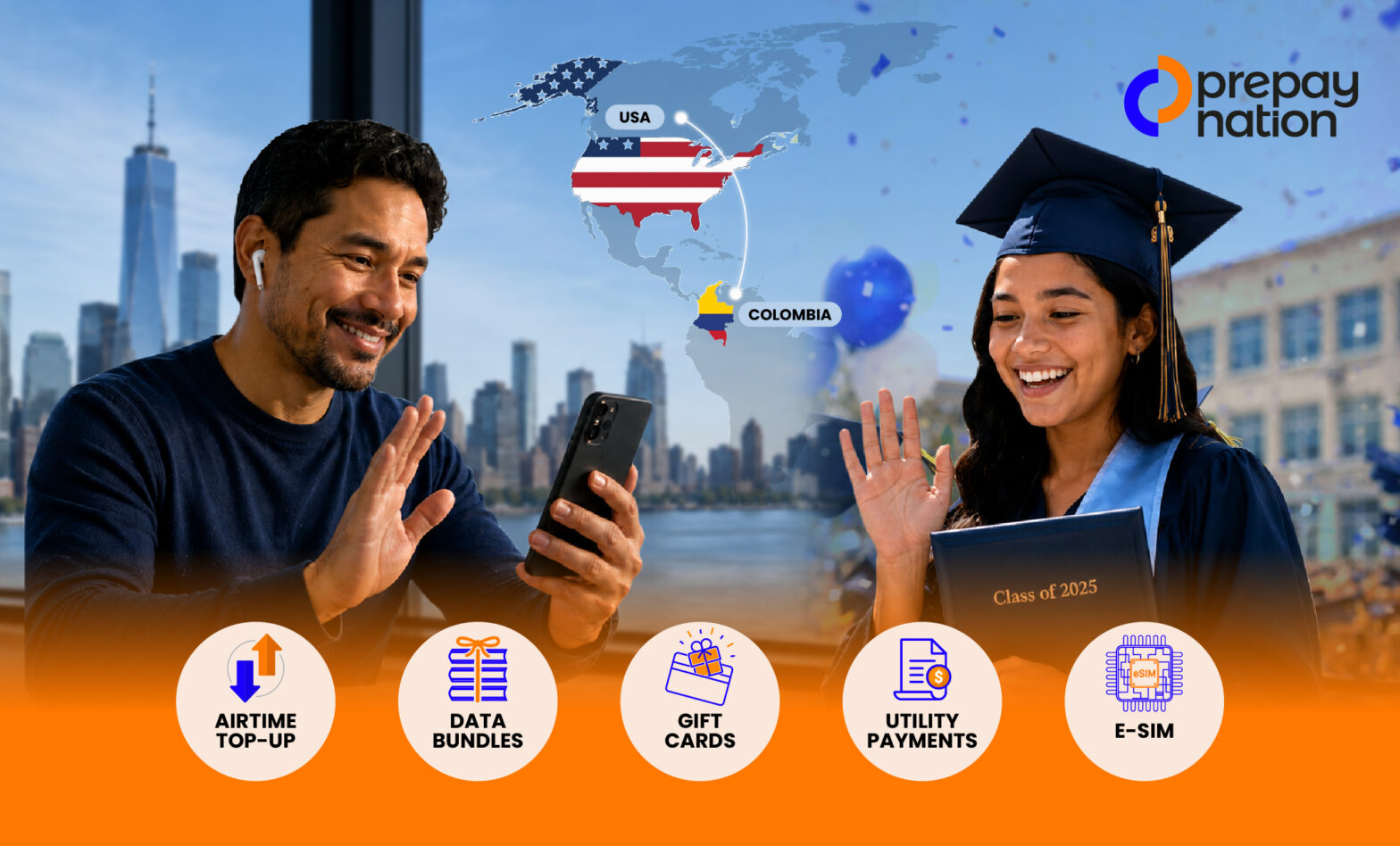
We often measure progress in numbers. The next billion mobile subscribers is frequently framed as a milestone — a signal of growth, expansion, and technological advancement.
But behind that number is something far more human.
Today, there are already around 5.8 billion unique mobile subscribers globally, expected to reach 6.5 billion by 2030. Growth is no longer coming from saturated markets. It is coming from regions where access is still developing — and where connectivity is not a luxury, but a necessity.
For many of us, being connected is effortless. It is fast, constant, and expected.
For the next billion users, it is something else entirely.
Connection is not about streaming or speed. It is about being able to call family across borders, receive support, access work opportunities, or simply stay in touch with what matters most. In many cases, a basic mobile top-up is not just a transaction — it is the moment that enables all of this to happen.
This is where the conversation around growth needs to shift.
Because the next wave of mobile adoption will not be driven by more features or more advanced technology. It will be driven by accessibility.
And accessibility, in this context, is powered by prepaid.
The Infrastructure Behind Everyday Connection
Prepaid products are often seen as simple utilities. But in reality, they form the foundation of how billions of people access the digital world.
Airtime remains the most direct way for users to connect to mobile networks. Data enables access to messaging apps, digital services, and online platforms. Bundles provide affordability and predictability in markets where cost sensitivity is high.
This becomes even more visible when you look at real-world corridors.
Take the UAE to the Philippines, for example — one of the most active remittance corridors globally. For many overseas workers, sending value is not limited to cash. A simple airtime or data top-up ensures their families remain connected daily, even between remittance cycles.
Or consider US to Latin America, where digital adoption continues to grow rapidly. Gift cards are increasingly used as an alternative form of value transfer, giving recipients direct access to global platforms without requiring traditional banking infrastructure.
These are not edge cases. They are everyday use cases.
Expanding Access Beyond Connectivity
Beyond airtime and data, prepaid products are evolving to meet broader digital needs.
Gift cards, now part of a multi-trillion-dollar global market, have become a practical tool for cross-border value exchange and access to digital services. They allow users to participate in global commerce, even in markets where payment options are limited.
At the same time, eSIM technology is removing one of the last physical barriers to connectivity. For users moving across borders — whether for work or travel — the ability to instantly activate a mobile connection, without relying on physical SIM cards, represents a significant shift.
Together, airtime, data, bundles, gift cards, bill payments, and eSIMs form a complete ecosystem of access, not just to networks, but to participation in the digital economy.
Why Simplicity Wins
In many of the markets driving the next phase of growth, complexity is not a value-add. It is a barrier. Users are not looking for feature-heavy platforms or layered financial products. They are looking for solutions that are simple, reliable, and immediately usable.
This is why prepaid continues to scale:
Rethinking Growth
The next billion users will not be reached through complexity. They will be reached through practical solutions, accessible products, and reliable experiences.
This requires a shift:
The future of mobile growth is not defined by speed, devices, or even technology alone.
It is defined by how effectively we enable people to stay connected — to their families, their income, and their opportunities. And that connection is powered, more often than not, by something simple: airtime, data, bundles, gift cards, bill payments, and eSIMs. Not as products. But as enablers of everyday life.
The businesses that understand this and build the right infrastructure to deliver it will be the ones that reach the next billion first.
Enabling that infrastructure is exactly what Prepay Nation was built to do.
Prepay Nation is a global micro-value transfer hub that helps businesses deliver seamless prepaid digital services across borders. Through its enterprise-grade API and extensive global partner ecosystem, Prepay Nation connects mobile operators, fintechs, digital wallets, retailers, and distribution platforms to millions of prepaid products worldwide, making it simpler for organizations to reach the people who need connectivity most.
FAQ 1: What is driving mobile growth among the next billion users?
Mobile growth is increasingly coming from developing regions where access is still emerging. For these users, connectivity is not about speed or streaming. It is about staying in touch with family, accessing work opportunities, and participating in the digital economy. Prepaid products such as airtime, data bundles, and eSIMs are the primary enablers of this growth.
FAQ 2: Why is prepaid the preferred model for mobile connectivity in emerging markets?
Prepaid works without a bank account, without long-term contracts, and in real-time. In markets where cost sensitivity is high and financial infrastructure is limited, prepaid products offer affordability, predictability, and immediate usability, making them the most accessible way for people to connect.
FAQ 3: How do cross-border airtime top-ups work?
Cross-border airtime top-ups allow individuals to instantly send mobile credit to someone in another country. For example, a migrant worker in the UAE can top up a family member’s phone in the Philippines directly, ensuring they stay connected between remittance cycles. This is enabled by global prepaid API platforms such as Prepay Nation.
FAQ 4: What role do digital gift cards play in cross-border value transfer?
Digital gift cards have become a practical tool for cross-border value exchange, especially in markets where traditional banking infrastructure is limited. They give recipients direct access to global digital platforms and services, enabling participation in the global digital economy without needing a credit card or bank account.

Author
Kim Fajardo, Corporate Marketing & Exec. Support Manager